Golden Hour vs Blue Hour: What Every Couple Should Know Before Planning Their Wedding Timeline
September was almost over, but nobody had told the sun.
It was a Maryland wedding — a venue with no shade to speak of, wide open, beautiful, and completely exposed. I tried a few couple portraits before the ceremony, but the light was too harsh, too direct. The kind of light that flattens everything and makes people squint. So we made a call: we'd come back after the ceremony, when the sun had dropped a little and the quality of light had changed.
What we didn't know yet was how much the day was about to change too.
The bride got sick right after the ceremony. Not feeling-a-little-off sick — really sick. She missed cocktail hour. She barely made it through the early part of reception. The groom didn't leave her side. The couple portraits we'd planned? Gone. Her guests were watching the sky, watching the clock, watching the light get softer and then start to fade. By the time she felt well enough to step outside — her husband still right next to her — it was past 7 PM.

Photo by Love Story by Aira Photography
Golden hour was over. The sunset portraits she'd been thinking about since she first planned this day. But that's not where this story ends.
What Is Golden Hour
Most people have seen golden hour wedding photos even if they didn't know what to call them. That warm, glowy light. Skin that looks like it's lit from within. Long shadows stretching across the ground. Everything just a little softer than real life.
Golden hour happens in the window before sunset — roughly the last hour of daylight. But here's what most couples don't realize: not all of that hour is created equal.
The best light isn't at the very end, right as the sun touches the horizon. It's actually about 45 to 30 minutes before sunset — that 15-minute window when the sun is low enough to be soft and warm, but still high enough to give you direction and depth. The light wraps around people instead of cutting across them. Colors go golden without going orange. It's flattering in a way that's very hard to recreate any other time of day.
If sunset is at 7:30 PM, that window is roughly 6:45 to 7:00. That's when I want to take you outside.
After that, the light changes fast. By 7:10 or 7:15, you're already in different territory — and that territory has its own name.
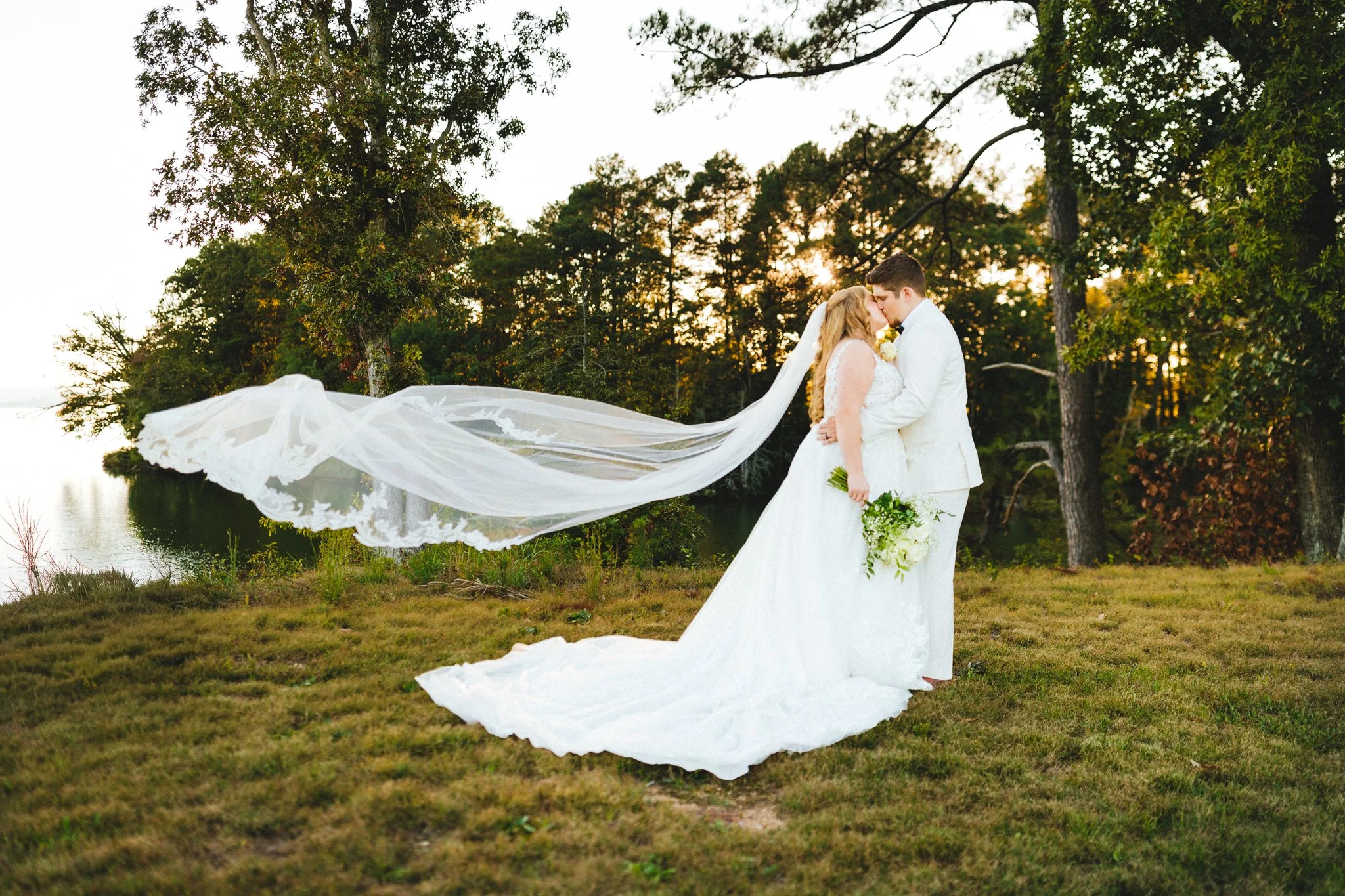
Photo by Love Story by Aira Photography
What Is Blue Hour
Blue hour is what comes after golden hour. The sun has dropped below the horizon, but the sky isn't dark yet — it shifts into deep blues, purples, sometimes a cool pink at the edges. The light is still there, but it's coming from the sky itself now, not the sun.
It looks cinematic. Moody. Like a still from a film.
And it happens faster than most people expect.
On a clear September evening with sunset around 7:24 PM — by 7:05, the warmth was already gone. The light on people's faces had gone from golden to cool, with a cast that reads orangey-red or even purplish in blue hour wedding photos. Beautiful, but completely different from what golden hour looks like. Not something you can fix in editing, because it's not an editing problem. It's just a different kind of light.
After the sun fully sets, without another light source nearby, you need a flash to get a clear portrait. You can still shoot without one — silhouettes, slow shutter, intentionally artistic frames — but if you want to actually see people's faces, flash is the only option.
Blue hour has a look. It's just not the warm, sun-kissed look most couples picture when they imagine their wedding portraits.
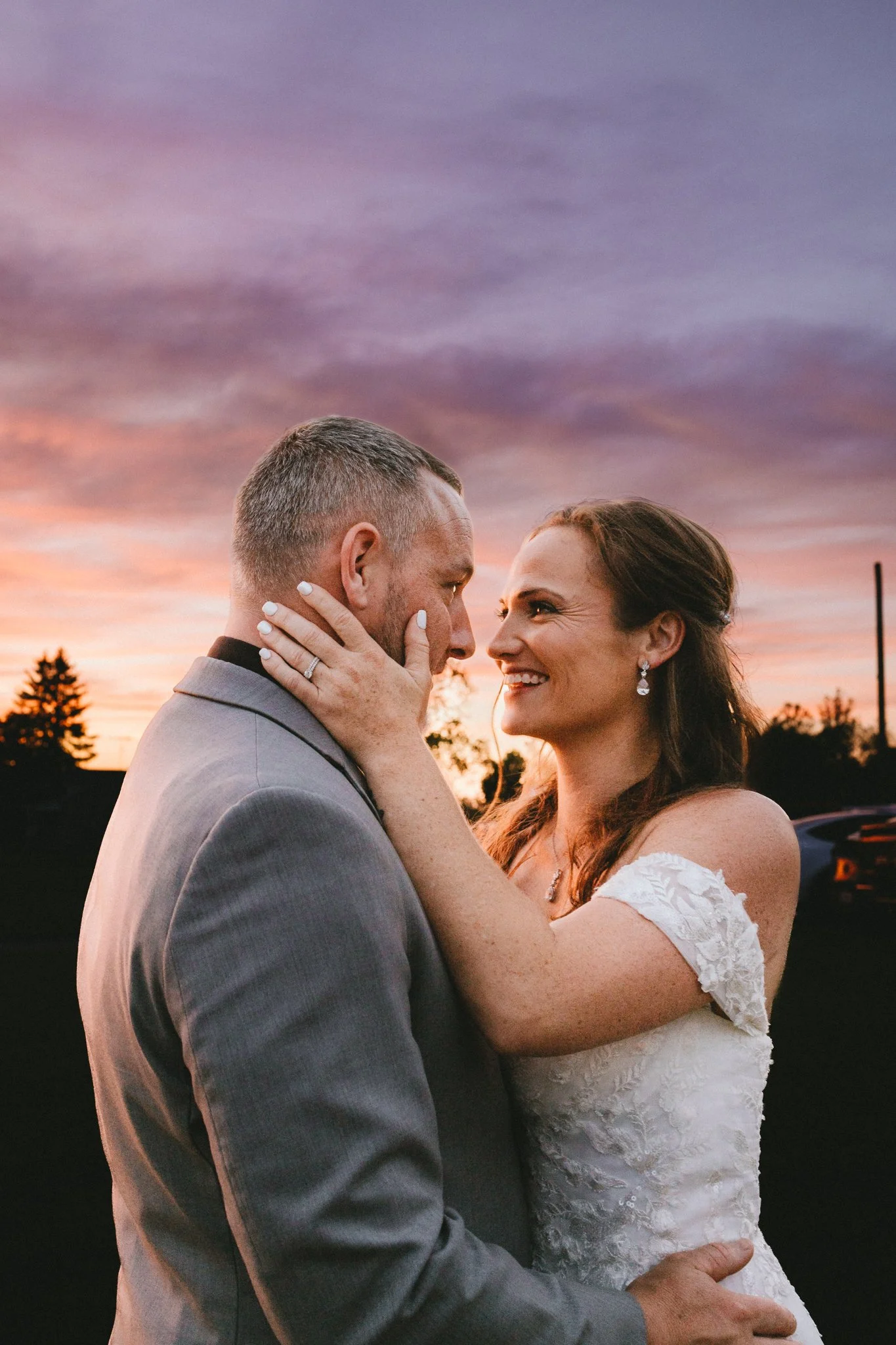
Photo by Love Story by Aira Photography
Why Getting the Timing Wrong Is Hard to Fix
Here's where it matters.
A lot of couples put "sunset portraits" on their wedding day timeline somewhere in the 30 minutes before sunset — which sounds right. But in practice, by the time you finish dinner, step away from your guests, walk outside, and actually start shooting, that window has already shifted. What you thought was golden hour is blue hour. And the photos will show it.
This isn't a matter of editing style. It's not something your photographer can correct in post. The warmth you see in golden hour photos comes from light that was actually falling on people's faces. You can shift tones in editing, but you can't put light somewhere it wasn't. The shadow that wraps around a cheekbone, the way a shoulder catches the last of the sun — that's physics, not a filter.
Both golden hour and blue hour can give you beautiful wedding photos. But they're not interchangeable. They look different, they feel different, and they require different things from your photographer. The only way to get the one you want is to plan for it specifically.
That starts with knowing exactly when your window opens — and making sure your timeline protects it.
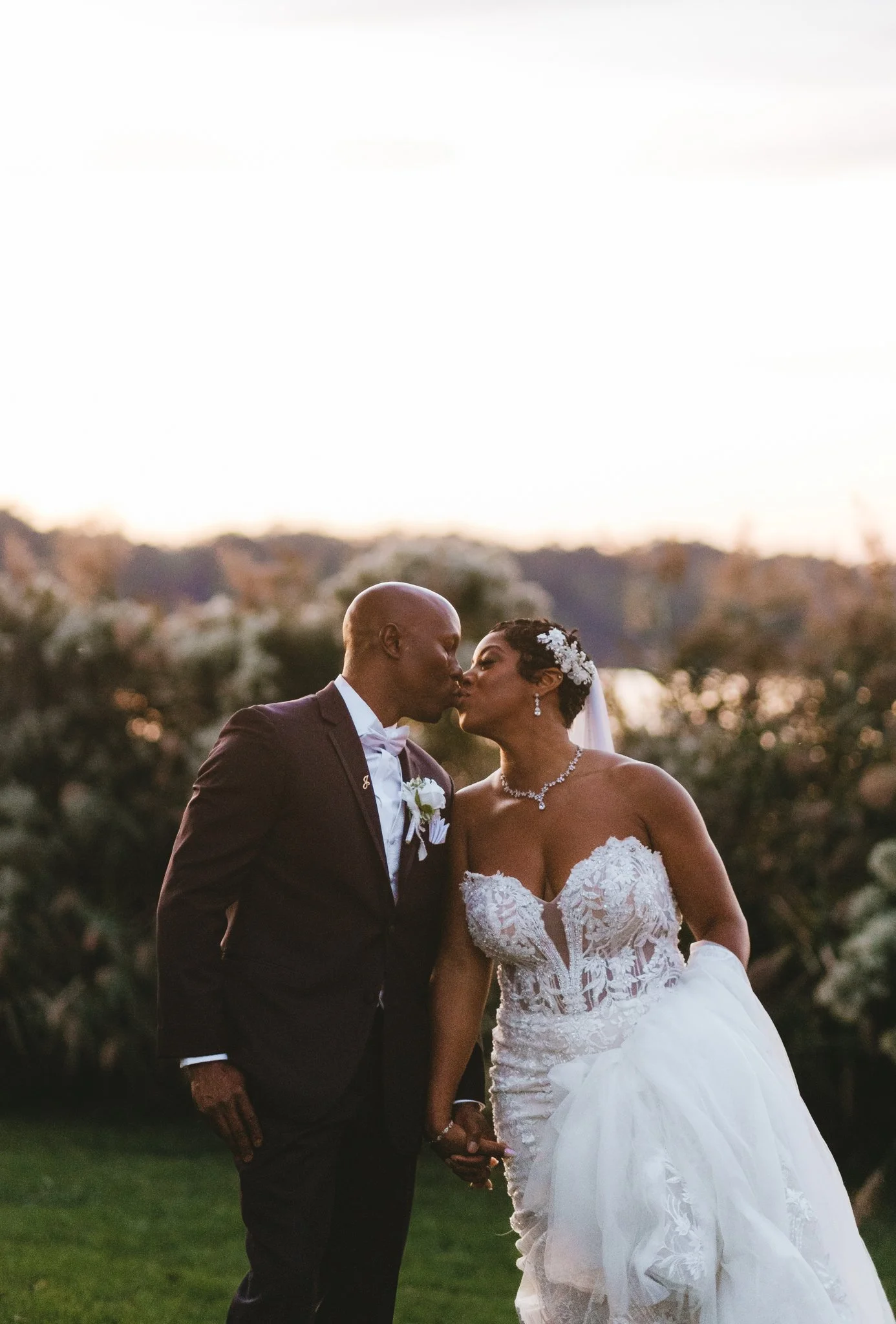
Photo by Love Story by Aira Photography
How to Plan Your Timeline Around the Light
The good news is this doesn't have to be complicated. You just need to know two things: when your sunset is, and which kind of light you actually want.
If you want golden hour, the window you're working with is roughly 45 to 30 minutes before sunset. If sunset is at 7:30 PM, that means starting portraits at 6:45 and wrapping around 7:00. You have about 15 minutes of that light at its best, so the earlier you're outside within that window, the more of it you get.
If your day runs late and you miss that window — or if you're drawn to something moodier, more cinematic — blue hour is roughly 7:10 to 7:20 for a 7:30 sunset. The light will be cool, the sky deep, and the photos will have a completely different feeling. Not worse. Just different. And once the sun fully sets, I'll use flash or move you toward another light source to keep shooting clearly.
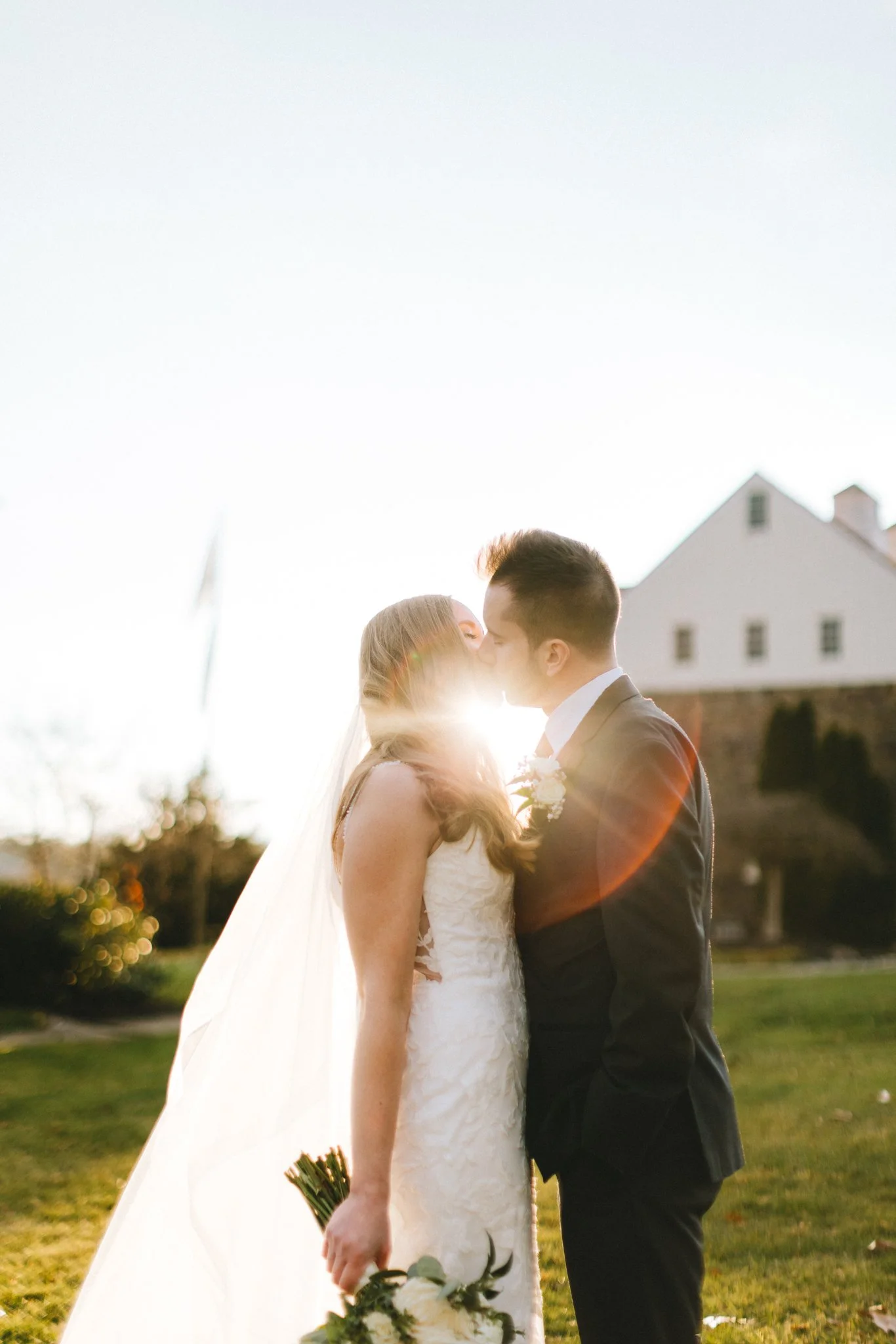
Photo by Love Story by Aira Photography
Before every wedding I photograph, I look up the exact sunset time for that specific date and location. I calculate the window, flag it in your wedding day timeline, and make sure your coordinator knows when we're stepping out. You don't have to think about any of this on your wedding day. That's my job.
What you do need to decide — before the day — is what you want your photos to feel like. Warm and golden, or cool and cinematic. Because the light won't wait, and the timeline needs to be ready for it.
Back to That September Wedding
The bride stepped outside with her husband just after 7 PM, still a little unsteady, but there. The sky had already shifted — deep blue, the last of the light sitting low on the horizon. Not what she'd imagined. Not golden hour.
I shot both directions — with the remaining light, against it. Every photo from that session has a coolness to it, a quietness. And honestly? They're some of the most beautiful portraits I've taken.
She didn't get the warm, glowy sunset she'd been picturing. What she got instead was her husband, who hadn't left her side all day, finally alone with her in the fading light. That part — no timeline could have planned for.
But the light? That part we can always plan for. As a Maryland wedding photographer, every couple I work with gets a timeline built around their specific sunset time — not a generic template, not a guess. Because the light on your wedding day moves whether you're ready for it or not. My job is to make sure you are.
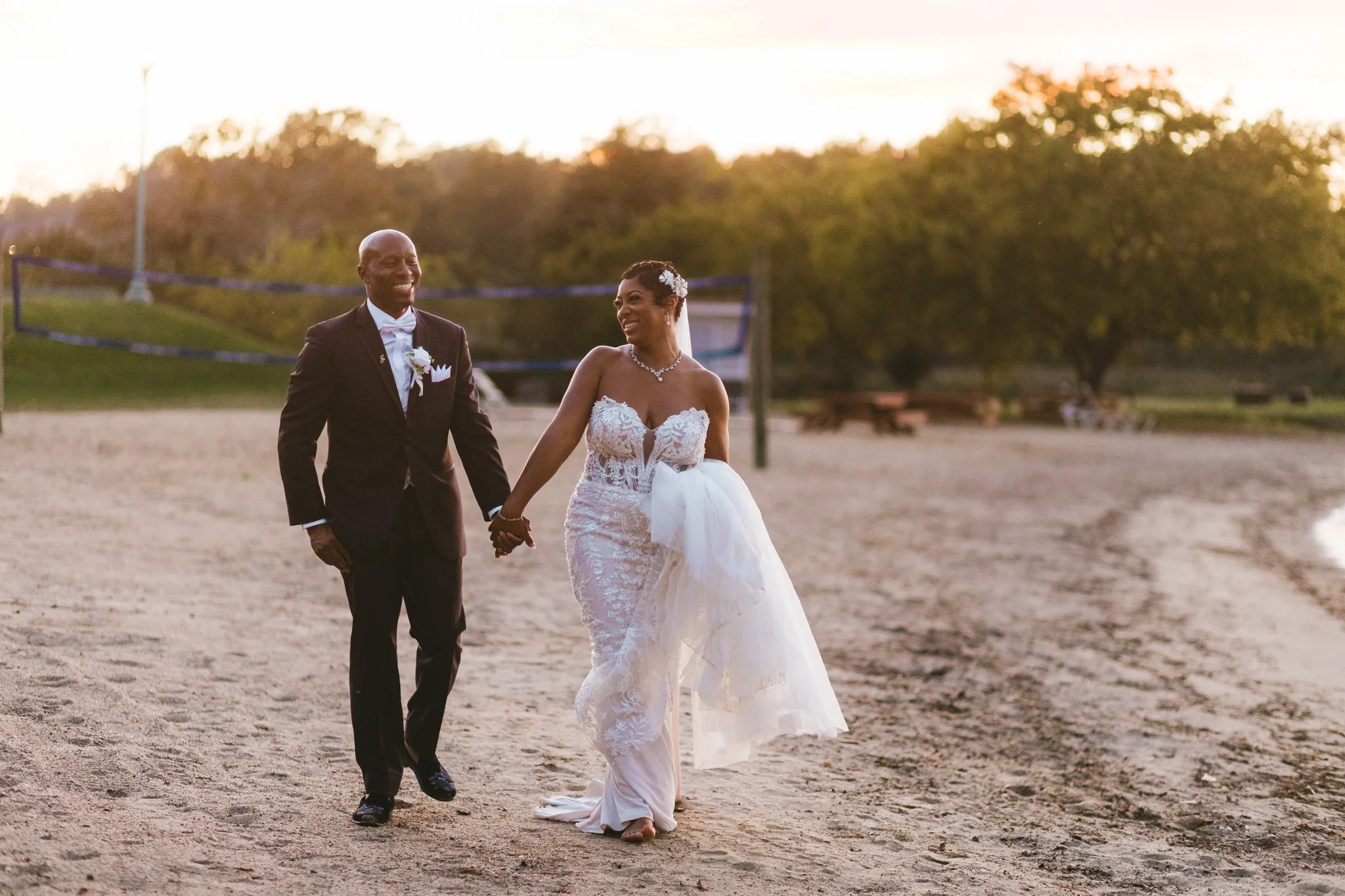
Photo by Love Story by Aira Photography
If you're planning a wedding and want someone who will think through every detail — including the light — I'd love to hear from you.